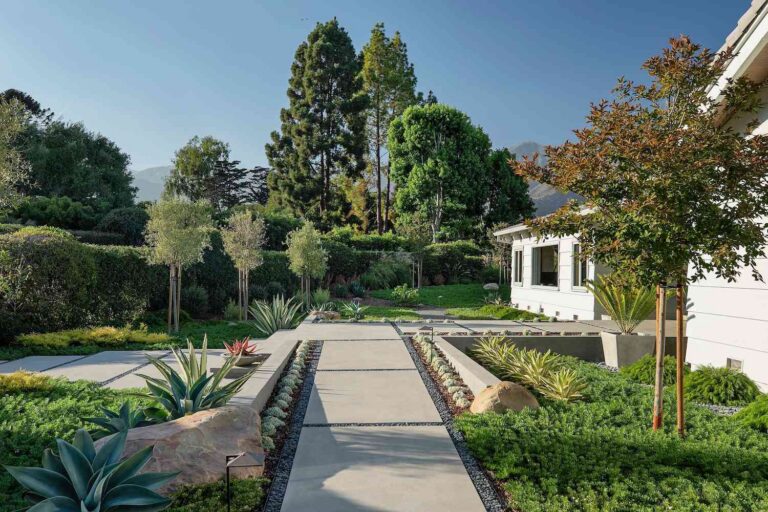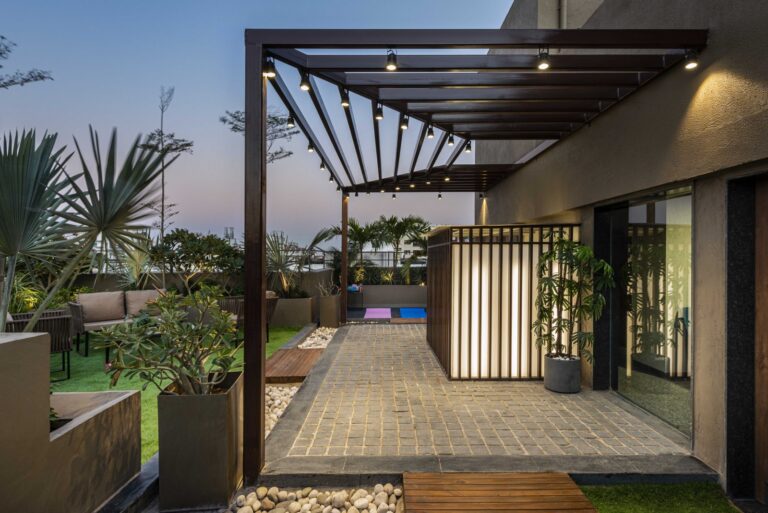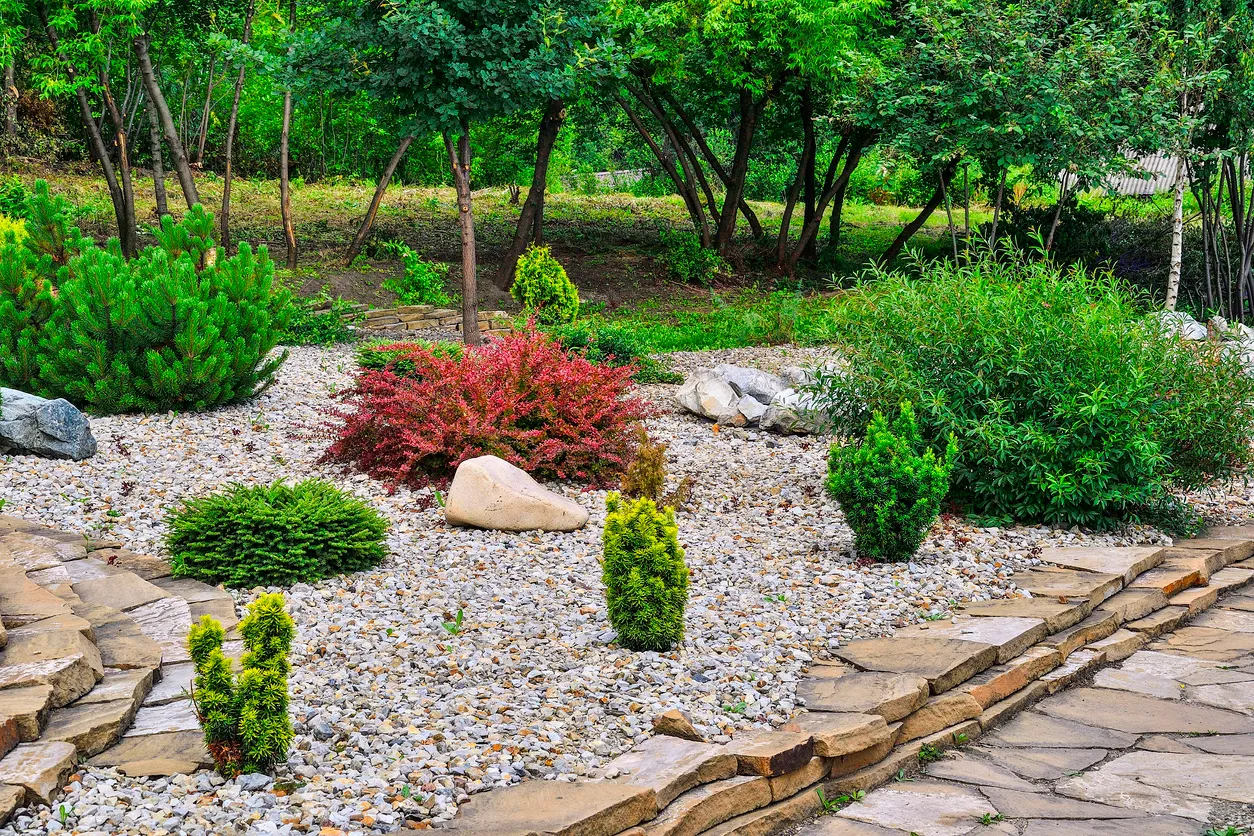
The Geology of Circulation: Designing and Constructing Flagstone Garden Pathways
Best flagstone path options for gardens a garden pathway is fundamentally a bridge between the built environment and the organic landscape. When executed using flagstone, this transition becomes an act of geological curation. Flagstone—a collective term for thin, tabular rock slabs—offers an aesthetic and functional versatility that poured concrete or modular pavers cannot replicate. However, the installation of these stones involves far more than simply arranging natural debris upon the earth. It requires a sophisticated understanding of subsurface preparation, mineralogy, and the long-term mechanics of drainage and frost-heave cycles.
The structural integrity of a stone path is determined entirely by what remains hidden beneath the surface. Without a carefully engineered base of compacted aggregate, flagstone will inevitably shift, crack, or sink as seasonal moisture content in the soil fluctuates. Furthermore, the selection of the stone itself—whether sandstone, limestone, slate, or quartzite—must be reconciled with the site’s specific microclimate and the intended intensity of foot traffic. To design a path that endures is to treat the installation as a permanent hydraulic system, one that must manage water infiltration while resisting the creeping influence of vegetation and erosion.
In the following sections, we will explore the technical nuances required to move beyond amateur installations. This analysis focuses on the systems that govern path longevity, the material science of stone selection, and the logistical realities of high-quality masonry. By adopting a diagnostic approach to the landscape, one can create circulation corridors that not only define the garden’s flow but also harmonize with the geological character of the region.
Understanding “best flagstone path options for gardens”
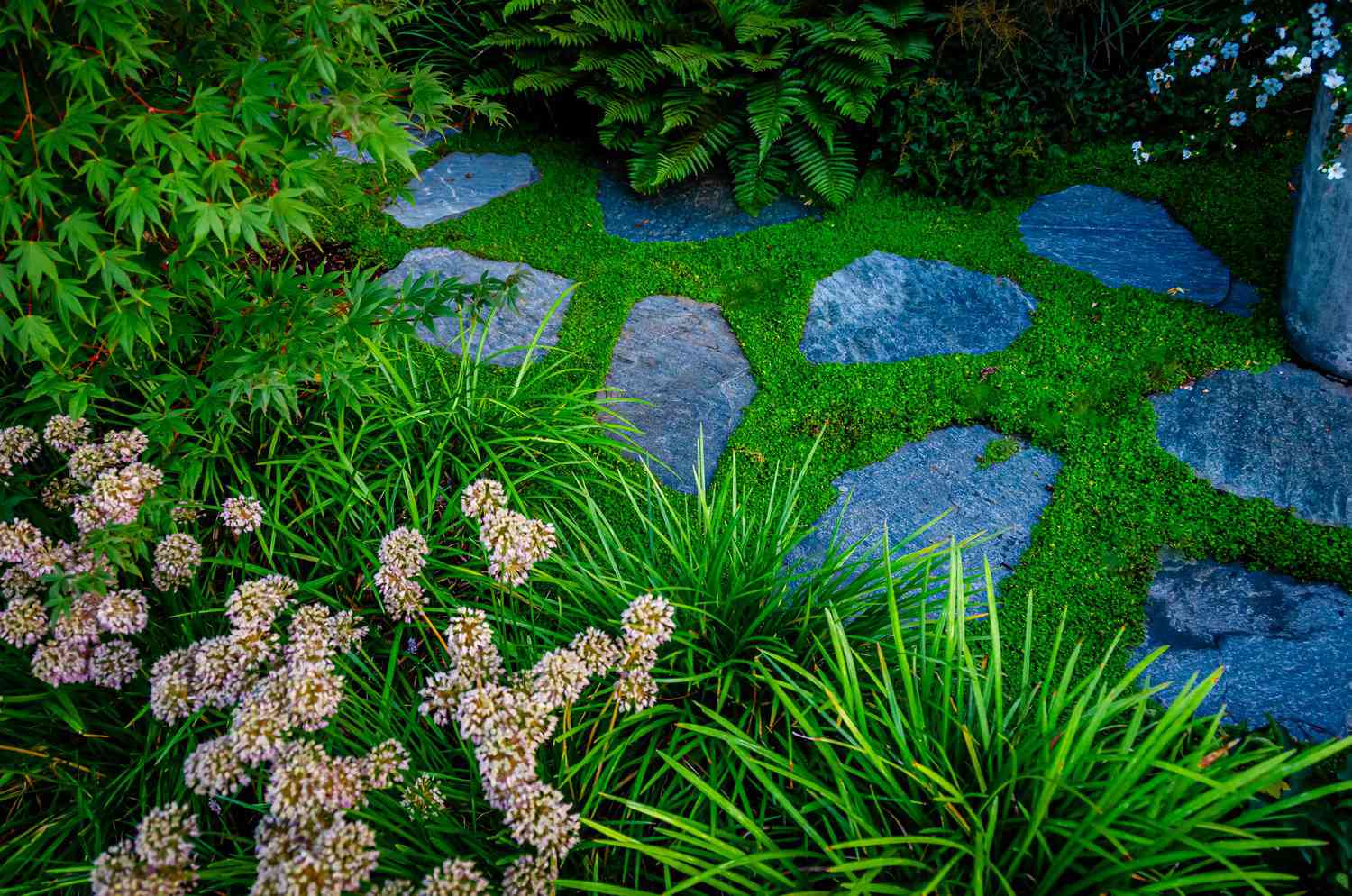
The search for the “best flagstone path options for gardens” is frequently derailed by a preoccupation with surface appearance. While color, texture, and pattern are vital to the garden’s visual language, they are secondary to the stone’s physical durability and its suitability for the local soil conditions. A common misunderstanding in residential landscape design is that all natural stone is equally durable. In truth, sedimentary rocks like certain sandstones are highly porous; they act like sponges, absorbing moisture that can then freeze and fracture the stone. Conversely, metamorphic rocks like quartzite or schist offer exceptional hardness but may provide a slick, hazardous surface when wet.
Oversimplification poses the primary risk to project sustainability. Many designers recommend a “dry-lay” method (placing stone directly onto soil or sand) as an easy, low-cost solution. However, this is almost always a flawed approach for paths intended to last. A professional-grade path requires a stabilized base, edge restraints to prevent lateral spreading, and proper jointing materials to maintain the structural interlock. When searching for the ideal solution, one must define “best” in the context of the site: is the goal low-maintenance circulation, formal aesthetics, or native-plant permeability? The answer dictates the entire engineering strategy.
Historical and Systemic Evolution of Stone Walkways
Best flagstone path options for gardens historically, flagstone pathways were products of convenience—utilizing whatever rock was found within the immediate vicinity of the property. Early masonry relied on thick-bed lime mortars or simple “earth-fast” techniques where stones were hammered directly into packed clay. While these methods possess a certain period charm, they were also prone to chronic movement. The modern approach has evolved to prioritize the “engineered dry-set” or “mortared-on-concrete-pad” systems. These systems provide a buffer between the earth and the stone, decoupling the surface from the unpredictable shifts of the subgrade. This evolution reflects a shift from accidental design to architectural precision, treating the garden path as a permanent, load-bearing infrastructure.
Conceptual Frameworks for Path Design
-
The Hydrostatic Pressure Model: Water is the enemy of all masonry. This model assumes that any path will be subjected to water and designs the base aggregate layers to act as a French drain, moving moisture laterally away from the path center.
-
The Structural Interlock Framework: This focuses on the friction between the stones and the bedding aggregate. By using angular, crushed stone rather than rounded river gravel, the path gains internal shear resistance, preventing the stones from “wobbling” under foot.
-
The Geotextile Separation Model: This framework mandates the use of permeable fabric between the subgrade and the base aggregate. It prevents the subgrade’s fine silts from migrating upward, which would otherwise “choke” the drainage capacity of the base layers.
Key Categories and Variations
| Stone Type | Primary Composition | Water Absorption | Durability |
| Sandstone | Quartz/Feldspar | High | Moderate |
| Slate | Clay/Mica | Very Low | High |
| Limestone | Calcium Carbonate | Moderate | Moderate |
| Quartzite | Quartz | Very Low | Exceptional |
| Bluestone | Sandstone/Feldspar | Low-Moderate | High |
Decision Logic: In areas with heavy rainfall or high frost-heave potential, prioritize low-absorption stones like quartzite or high-density slates. In arid climates, limestone or softer sandstones are viable and often more cost-effective due to regional availability.
Detailed Real-World Scenarios Best Flagstone Path Options For Gardens
-
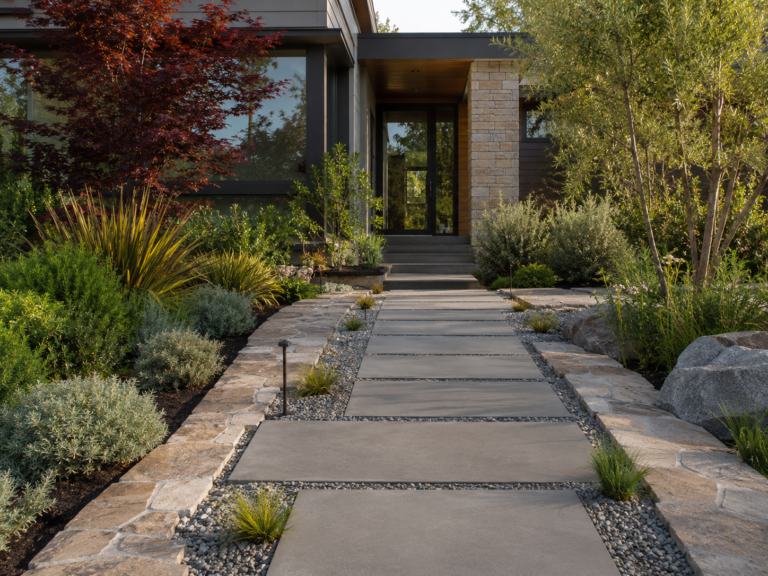
Scenario A: The High-Traffic Utility Path: A pathway connecting a garage to the kitchen door. Decision: Utilize 2-inch-thick, machine-cut bluestone on a 4-inch compacted base of angular aggregate. Use a resin-based permeable jointing material to prevent weed growth and provide a smooth, stable surface for carts.
-
Scenario B: The Wildflower Meadow Walk: An informal path through a garden. Decision: Use irregular “irregular” flagstone with wide joints filled with sand or crushed granite. This allows for creeping thymes and sedums to grow between the stones, reinforcing the naturalistic aesthetic while maintaining a functional surface.
-
Scenario C: The Frost-Heave Prone Slope: A path on a northern-facing, heavy-clay slope. Decision: Install a 6-inch deep drainage layer with perforated PVC underdrains along the edge. The base must be strictly non-organic, and edge restraints are mandatory to stop the stones from sliding downhill.
Planning, Cost, and Resource Dynamics
The cost of flagstone is highly variable, influenced more by transportation and labor-intensive fitting than by the price of the material itself.
| Project Component | Cost Influence | Complexity |
| Subsurface Excavation | Moderate | High |
| Aggregate/Base Material | Low | Low |
| Stone Procurement | High | Low |
| Precision Cutting/Fitting | High | Very High |
Opportunity Cost: Choosing thin, cheap stone will lead to premature cracking under vehicle traffic or heavy garden equipment, resulting in a full replacement cost within 5–10 years. Investing in thicker, high-density stone up-front is a classic hedge against long-term maintenance inflation.
Risk Landscape and Failure Modes
-
Subgrade Saturation: If the drainage base is insufficient, water pools beneath the stone, causing the earth to expand during winter—pushing the path out of alignment.
-
Alkaline Efflorescence: In some limestone and concrete-backed installations, salts migrate to the surface, causing unsightly white staining that is difficult to remove without chemical intervention.
-
Root Displacement: Without a heavy-duty geotextile barrier, invasive tree roots can penetrate the base, physically lifting the flagstone from beneath.
Governance, Maintenance, and Long-Term Adaptation Best Flagstone Path Options For Gardens
A flagstone path is a dynamic asset. Maintenance should be scheduled:
-
Annually: Inspect joints. If sand or gravel has washed out, refill to prevent stone edge chipping.
-
Bi-Annually: Check for loose stones. If a stone moves, it indicates a failure in the bedding layer directly beneath it—the area must be excavated and re-compacted immediately.
-
Decadal: Re-evaluate the path’s drainage. Garden terrain changes over time; what was once a dry slope may have become a water collection point.
Measurement, Tracking, and Evaluation
-
Leading Indicators: After the first rain, observe the path. If water does not clear from the surface within 20 minutes, the site grading is incorrect.
-
Lagging Indicators: If the edges of the path are beginning to fray or spread outward, the containment system (edging) has likely failed.
-
Documentation: Maintain a map of the original stone layout and keep extra stones of the same geological batch, as natural stone colors shift significantly between mining lots.
Debunking Common Misconceptions Best Flagstone Path Options For Gardens
-
Myth: “All stone is naturally slip-resistant.” Correction: Some stones, like polished slate or wet limestone, can become extremely hazardous. Always test the “wet friction” of a sample stone.
-
Myth: “You don’t need a base if the soil is hard.” Correction: Hard soil is usually clay, which is the worst possible base for a path because it expands and contracts dramatically with water.
-
Myth: “Flagstone is a ‘natural’ path that doesn’t need edging.” Correction: Without edging, stones at the perimeter of the path will eventually work their way into the lawn or garden bed, losing their foundation.
Conclusion
The selection and installation of the best flagstone path options for gardens require a disciplined adherence to the principles of masonry and site hydrology. By viewing the garden path not merely as a surface finish but as an integrated system of drainage, structural support, and material selection, one can ensure that the investment provides decades of service. The resilience of the path relies on the builder’s willingness to prepare the unseen layers—the foundation, the geotextiles, and the drainage channels—that ultimately dictate the life cycle of the stones above. Patience in the planning phase is the single greatest factor in achieving a durable, aesthetically coherent, and functionally superior garden circulation system.