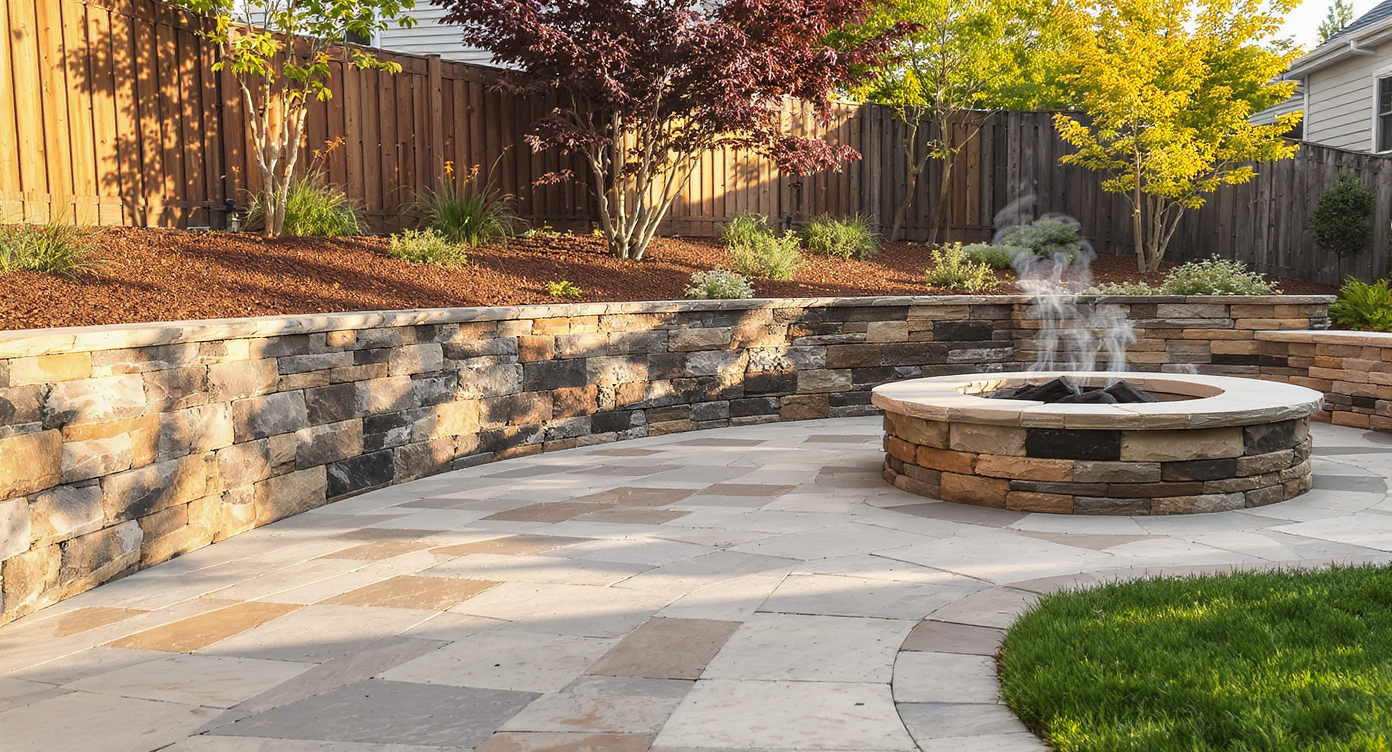
Common Hardscape Installation Mistakes: The Definitive Technical Reference
Common hardscape installation mistakes the professionalization of residential outdoor space has, in recent decades, brought the intricacies of civil engineering into the realm of the backyard. Hardscaping—the structured integration of masonry, timber, and modular paving—is frequently treated as a secondary aesthetic concern. Yet, when the structural reality of the site is disregarded, the resulting installation becomes a liability. A patio, retaining wall, or driveway is not merely a surface finish; it is a complex infrastructure system designed to manage gravity, water migration, and soil movement. Failure to account for these forces during the initial build is the primary driver of the structural degradation that plagues residential landscapes.
The industry is currently saturated with simplified instructional content that prioritizes the “how” of assembly over the “why” of structural performance. This imbalance creates a false sense of security, encouraging practitioners to skip essential preparatory steps such as thorough subgrade compaction or the integration of proper geotextiles. These omissions are rarely catastrophic on day one; instead, they manifest as subtle, cumulative issues—cracking, heaving, or water infiltration—that undermine the entire investment. Achieving a long-term, resilient outdoor asset requires an analytical focus on the site’s physical constraints, rather than a reliance on generalized, one-size-fits-all construction methods.
By examining the patterns of structural failure, one can begin to categorize the most frequent lapses in judgment that compromise the integrity of outdoor environments. This discourse aims to dissect these failures, providing a high-level technical reference for those seeking to understand the mechanics of durable construction. Mastery in this field is found not in the execution of the surface aesthetic, but in the meticulous, often invisible, preparation of the foundation that supports it.
Understanding “common hardscape installation mistakes”
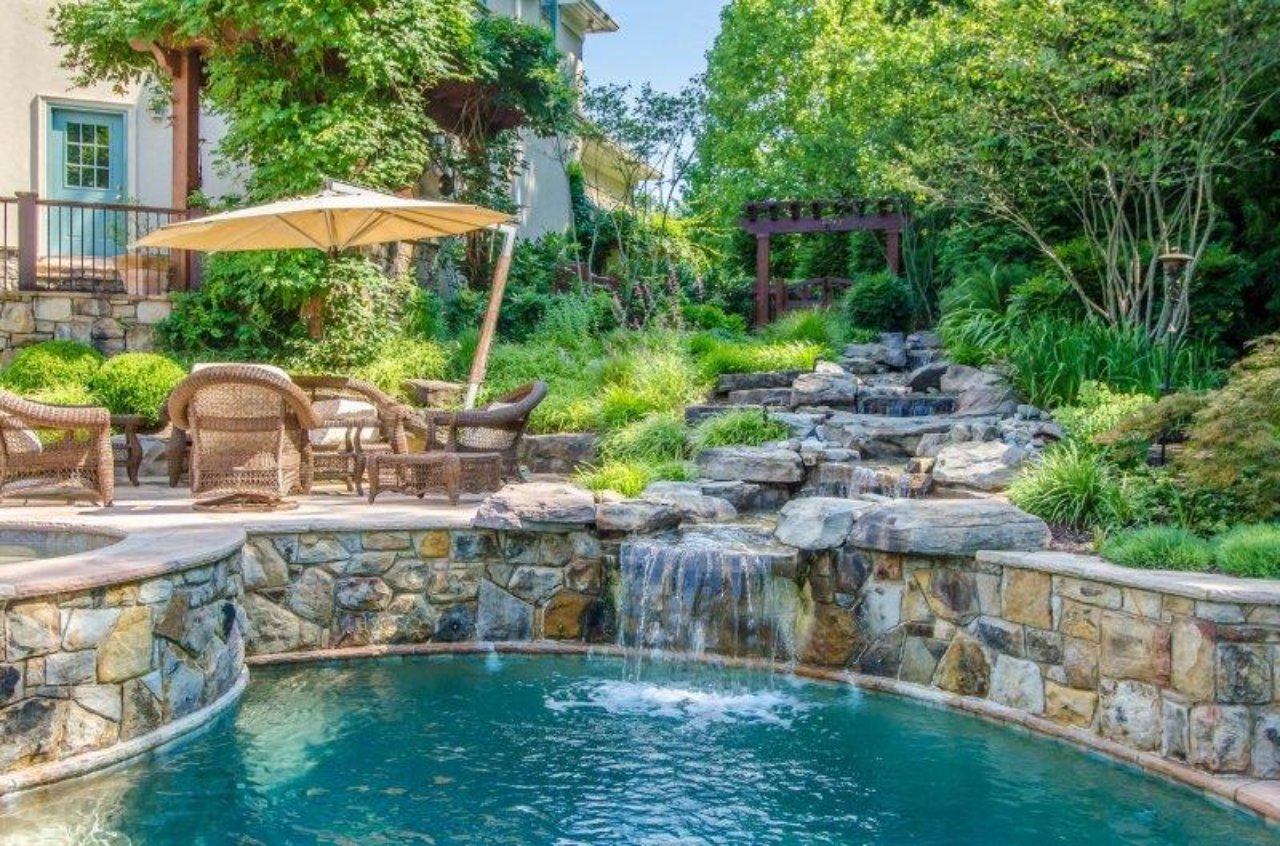
The identification and analysis of common hardscape installation mistakes require an objective look at the intersection of geotechnical reality and human error. These mistakes are rarely the result of a single poor decision but are instead the consequence of systematic oversights—such as neglecting the site’s hydrological profile or failing to match the material density to the intended load-bearing requirements. A recurring error in the industry is the tendency to equate “hard” with “permanent.” In reality, a rigid, inflexible structure built on dynamic, shifting soil is fundamentally unstable.
One of the most persistent misunderstandings is that surface-level precision can mask sub-surface failure. Practitioners often focus on the alignment of paver patterns or the symmetry of a wall face, while the base aggregate below is improperly graded or insufficiently compacted. This misdirection is a frequent precursor to failure, as the ground eventually forces its own movement upon the surface. To avoid common hardscape installation mistakes, one must treat the installation as a multi-layered mechanical system where the foundation, the drainage channels, and the finish materials act in concert. Ignoring the “invisible” layers is an oversimplification that inevitably leads to structural disappointment.
Furthermore, the lack of site-specific engineering often leads to the application of standard construction templates in contexts where they are inappropriate. A design plan optimized for sandy, free-draining soil will be disastrous if applied to a site with expansive clay or a high water table. Recognizing these environmental stressors is central to avoiding the most frequent pitfalls. The goal is not just to build, but to design an infrastructure that respects the physics of the site, ensuring that the installation remains an asset rather than a maintenance burden.
Historical Evolution and Systemic Complexity
Common hardscape installation mistakes the practice of earth retention and surface paving has evolved from basic, artisanal techniques—where mortar and manual labor compensated for a lack of structural science—to today’s reliance on geosynthetics, engineered aggregates, and mechanized compaction. This technological leap has made it easier to execute large projects, yet it has also hidden the fundamental principles of structural stability.
Conceptual Frameworks: The Physics of Foundation Common Hardscape Installation Mistakes
To navigate the risks of installation, several mental models are essential:
-
The Hydrological Loop: This framework treats the site as a living water management system. If the hardscape blocks the natural path of water, that water will exert hydrostatic pressure against walls or undercut the foundation of patios.
-
The Compaction Constant: Structural load-bearing capacity is directly proportional to the density of the base.
-
The Edge Restraint Essential: Modular surfaces are prone to “lateral creep.”
Taxonomy of Installation Failures
When reviewing common hardscape installation mistakes, a clear taxonomy emerges that categorizes the failures into three distinct classes:
| Failure Type | Primary Symptom | Root Cause | Mitigation Strategy |
| Base Failure | Irregular sinking/rutting | Insufficient compaction | Multi-stage plate compacting |
| Drainage Failure | Water pooling/foundation dampness | Improper grading | Engineered drainage channels |
| Structural Failure | Retaining wall bowing/collapse | Excessive hydrostatic pressure | Geogrid and chimney drains |
Decision Logic: If the error is caught during construction, the mitigation is straightforward. If caught post-construction, it often requires a full-site excavation to rectify, demonstrating why understanding the common hardscape installation mistakes is a fundamental economic imperative for any project.
Real-World Scenarios and Failure Mitigation
Scenario 1: The Slope Miscalculation
An installation on a mild slope requires specific terracing. When a builder treats a sloped site as flat, they neglect the lateral force of the soil. This leads to wall failure within three years. Decision point: If the slope exceeds 5%, the plan must pivot from gravity construction to reinforced soil mass.
Scenario 2: The Incompatible Jointing
Using rigid, cement-based mortar in a dry-laid patio is a classic mistake. When the patio moves (as all ground-based structures do), the rigid mortar cracks, leaving the joints vulnerable to water infiltration and vegetation growth. The second-order effect is that the stone edges spall, leading to permanent surface damage.
Planning Dynamics and Economic Resource Allocation Common Hardscape Installation Mistakes
The economics of hardscaping are defined by the “70/30 rule”: approximately 70% of the project’s budget and time should be allocated to excavation, base preparation, and drainage—the elements that the client never sees. Failing to recognize this is one of the most common hardscape installation mistakes in the industry. By skimping on the base to afford a more expensive surface stone, the builder guarantees that the surface will fail, rendering the extra expenditure on the stone a total loss.
Governance, Maintenance, and Long-Term Adaptation
A finished project is not the end of the process. It is the beginning of a maintenance cycle.
-
Review Cycles: Conduct a thorough inspection after the first freeze-thaw cycle of the year.
-
Adjustment Triggers: If joints show signs of erosion, re-apply stabilizing sand immediately; do not wait for the pavers to shift.
-
Layered Checklist: Keep a detailed record of the specific aggregate mix and geogrid used.
Measurement and Evaluation of Structural Integrity Common Hardscape Installation Mistakes
Tracking the health of an installation requires both leading and lagging indicators:
-
Leading Indicators: Surface levelness, drainage speed after rain, and joint tightness.
-
Lagging Indicators: Visible cracks, separation between elements, or the appearance of localized sinking.
-
Documentation: Maintain photographic records of the base-stage construction.
Common Misconceptions and Oversimplifications
The most pervasive myth is the “maintenance-free” hardscape. Hardscaping is a durable, long-term asset, but it is not static. Another common misconception is the idea that “bigger is always better” when it comes to stone size; larger stones require more intensive base stabilization to prevent tipping or uneven settling. Corrections to these myths are necessary to maintain a realistic expectation of what hardscaping can and cannot do.
Conclusion Common Hardscape Installation Mistakes
The structural integrity of a hardscape project is the ultimate measure of its success. By acknowledging the common hardscape installation mistakes that plague the industry—such as neglecting sub-base compaction, ignoring site-specific hydrology, and over-relying on aesthetic surface finishes—one can move toward a more disciplined, engineering-led approach. These outdoor environments are not merely decorative; they are significant, long-term infrastructure assets. When approached with patience, analytical rigor, and a commitment to the invisible requirements of the foundation, they stand as durable, high-value components of the residential landscape, capable of weathering the pressures of both the environment and time.