The Economics of Soil Retention: Engineering Stability and Value
How to reduce retaining wall costs retaining walls represent one of the most significant capital investments in residential and commercial landscape development. They are not merely decorative elements but critical geotechnical structures designed to counteract the lateral pressure of soil masses. Because they are subject to strict engineering standards and building codes, the financial outlay is rarely trivial. However, the cost of these structures is often inflated by poor site assessment, inefficient material selection, or a failure to integrate the wall into the broader site drainage strategy from the onset of the project.
The challenge in balancing structural requirements with budgetary constraints lies in the inherent tension between short-term capital expenditure and long-term asset performance. A wall built purely for the lowest immediate price tag frequently incurs excessive maintenance costs, leading to premature failure and the need for complete reconstruction. Conversely, over-engineering every element of the wall results in unnecessary material consumption and labor hours. True cost management requires a disciplined approach to site analysis and a nuanced understanding of the forces acting upon the structure.
Achieving economic efficiency requires that stakeholders move beyond standard contractor quotes and begin viewing the wall as an engineered solution to a specific set of site variables. Whether the goal is managing grade changes for utility or creating aesthetic terracing, the path to value lies in the optimization of the design-to-build pipeline. By addressing the fundamental drivers of cost—foundation depth, material sourcing, labor intensity, and drainage management—it is possible to deliver a high-performance system that remains fiscally responsible throughout its entire lifecycle.
Understanding how to reduce retaining wall costs
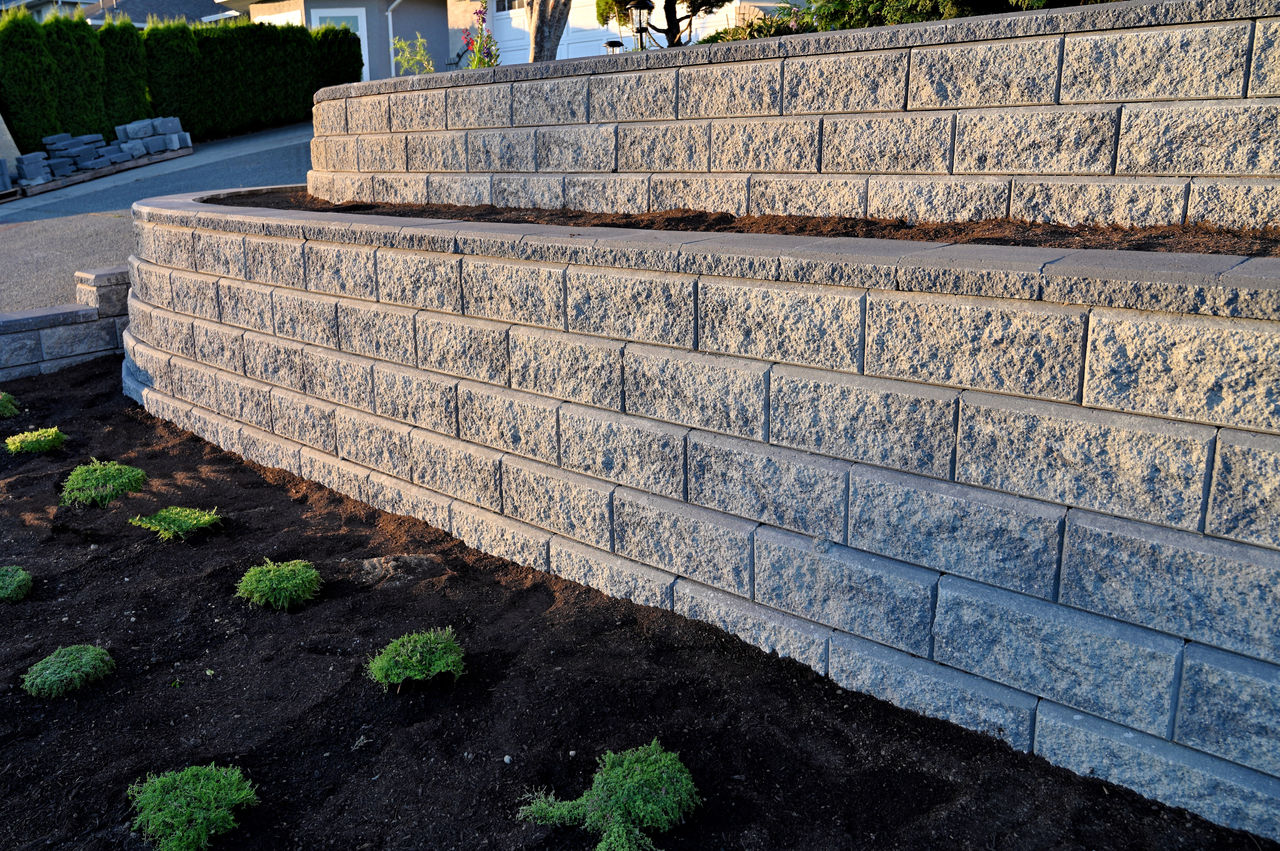
The primary driver of project inflation is the attempt to solve geotechnical problems with architectural solutions. When an installer treats a retaining wall as a simple stack of stone rather than a pressure-vessel component, they invite failure. Determining how to reduce retaining wall costs does not mean selecting cheaper materials; it means selecting the right materials for the specific load requirements. Misunderstandings here are expensive; for instance, many believe that mortar-bonded stone is inherently stronger, ignoring that rigid masonry is prone to cracking as the earth shifts, creating costly repair cycles that flexible, dry-stacked modular systems avoid.
Furthermore, oversimplification is a fiscal trap. A common error is the failure to account for water management. Hydrostatic pressure—the weight of water-saturated soil—is the primary killer of retaining walls. If the drainage plan is neglected, the cost of a “cheap” wall will inevitably skyrocket when the structure bulges or collapses. By investing in a robust backfill and internal drainage system early, one can significantly lower the mass and engineering requirements of the wall itself, providing a pathway to substantial savings while increasing longevity.
Deep Contextual Background: The Evolution of Retention Engineering
How to reduce retaining wall costs the history of earth retention has shifted from massive, gravity-dependent stone masonry to lightweight, reinforced mechanical systems. Historically, walls relied on sheer bulk—mass gravity walls—to hold back earth. These systems required immense labor and material volume. The advent of geogrids and engineered modular blocks allowed for the creation of structures that use the mass of the soil itself to maintain stability. This shift toward reinforced earth structures is the cornerstone of modern efficiency, allowing for thinner wall profiles and reduced excavation requirements, which are fundamental in any strategy regarding how to reduce retaining wall costs.
Conceptual Frameworks and Mental Models How To Reduce Retaining Wall Costs
-
The Gravity-to-Reinforced Shift: View the wall as part of a system. By using geogrid reinforcement, you turn the soil behind the wall into a cohesive structural mass, reducing the need for heavy, expensive stone or concrete.
-
The Water Mitigation Priority: Always treat drainage as a structural component. Water management is cheaper than structural reinforcement.
-
The Site-Utility Hierarchy: Prioritize changes to the site topography—such as grading a slope—over building a wall. Moving dirt is almost always less expensive than building a barrier to hold it in place.
Categorical Variations and Material Trade-offs
Understanding these categories is vital for those researching how to reduce retaining wall costs. If the project does not require a vertical face, a sloped embankment or a terraced design using modular blocks often presents the best balance of labor and longevity.
Real-World Scenarios and Decision Logic How To Reduce Retaining Wall Costs
Scenario 1: The Steep Residential Grade
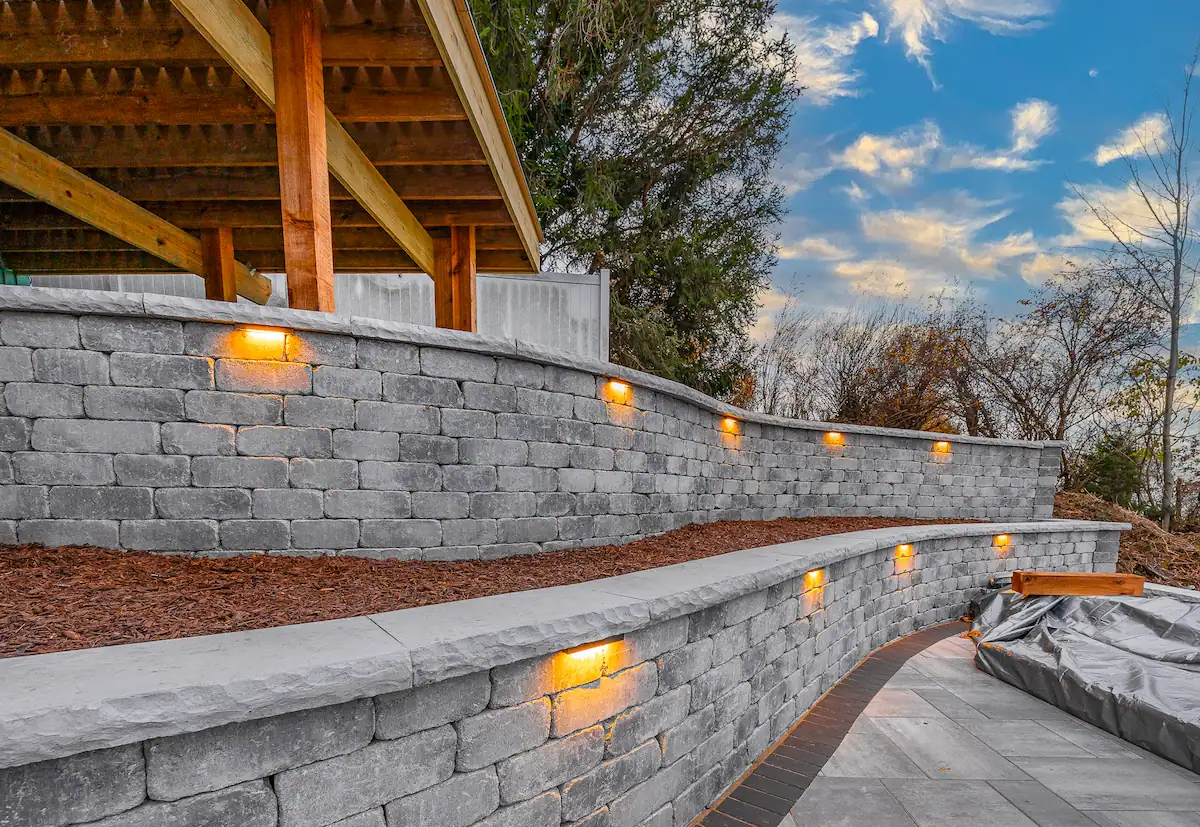
Instead of a single 6-foot wall, which requires extensive permitting and structural engineering, consider two 3-foot walls separated by a 4-foot terrace. This approach simplifies construction, often avoids the need for specialized engineering seals, and creates aesthetic value while keeping costs manageable.
Scenario 2: High-Flow Drainage Areas
If a wall is placed at the bottom of a catchment area, the pressure will be immense. Rather than over-building the wall, invest in a surface diversion trench above the wall. This reduces the load on the structure, allowing for a lighter, less expensive build.
Planning, Cost, and Resource Dynamics
Effective planning involves recognizing that labor and materials are not the only factors. Regulatory fees, engineering consultation, and long-term maintenance cycles must be factored into the total cost of ownership.
Risk Landscape and Failure Modes
Failure in retention is rarely instantaneous. It is a compounding process starting with minor drainage blockages, which leads to soil saturation, followed by increased pressure, and eventually, structural deformation. Recognizing how to reduce retaining wall costs requires avoiding these compounding risks by installing high-quality filter fabrics and perforated piping that will not clog over time, preventing the high-consequence failure of the entire system.
Governance, Maintenance, and Long-Term Adaptation How To Reduce Retaining Wall Costs
A wall should be viewed as an evolving system. Biannual inspections should focus on the integrity of the drainage discharge points and the presence of new cracks or bulges.
Common Misconceptions and Oversimplifications
-
Myth: “You can always use local dirt for backfill.”
-
Correction: Expansive or organic soil can cause massive pressure spikes; clean, granular stone backfill is essential.
-
-
Myth: “Higher walls are always better.”
-
Correction: Increased height exponentially increases lateral force; terracing is almost always more efficient.
-
The reality of how to reduce retaining wall costs lies in granular attention to the physics of soil and water. Ultimately, the most efficient wall is one where the design minimizes external forces and optimizes the use of site-specific materials, creating a stable, long-term asset. When stakeholders apply these disciplined engineering principles, they find that how to reduce retaining wall costs is not about finding cheaper components, but about superior design management.